
Why Anthropic Perpetuals Fell After Revenue Rose 47%
By Edward Chenug
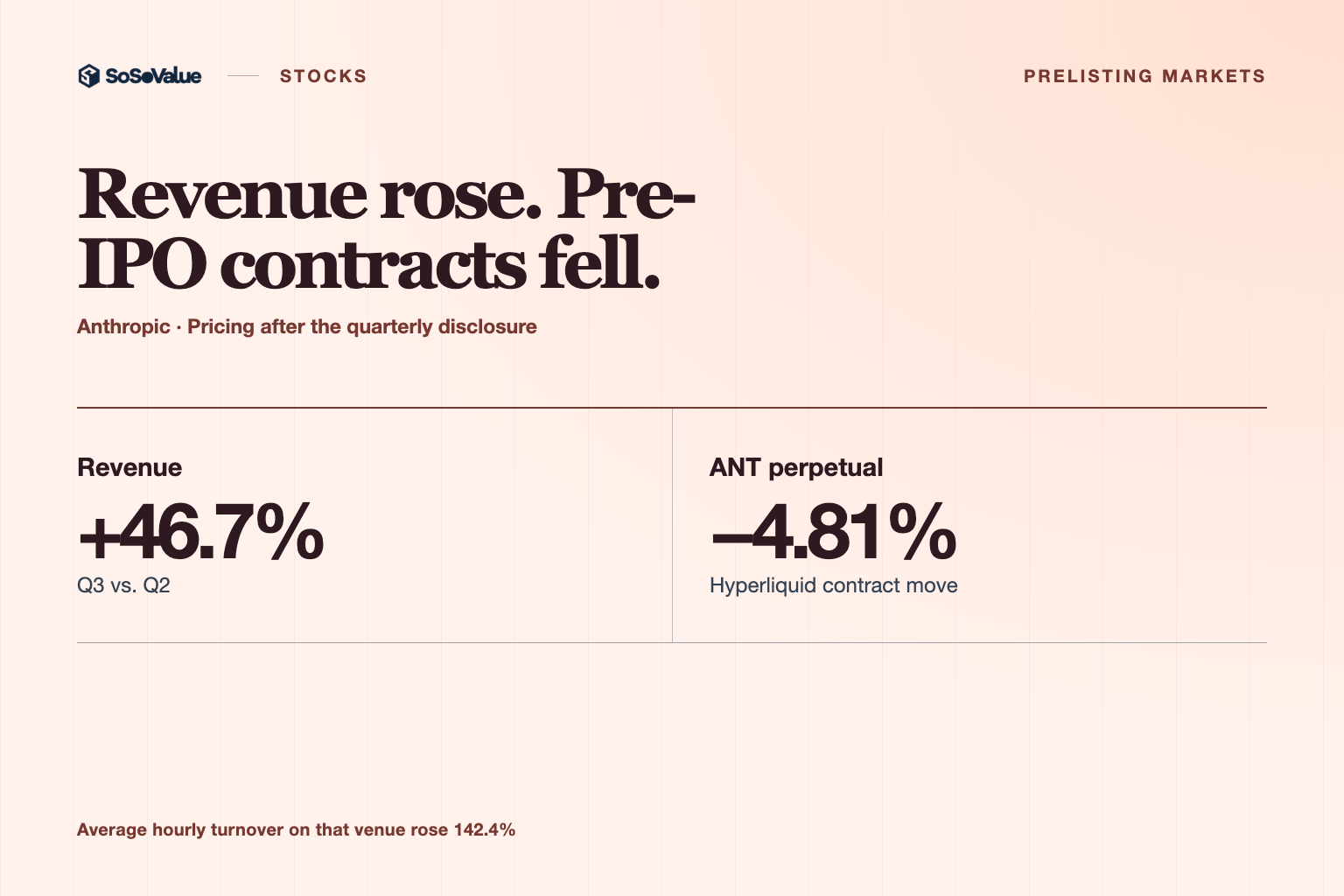
The first trading response to Anthropic’s quarterly disclosure came from derivatives tied to a company whose shares had yet to list. Revenue grew rapidly and a number of those contracts lost around 4% to 5%. The reaction captured the tension between increasing use of Claude and the expenses Anthropic accepted to serve it, in markets with their own constraints.
Faster demand came with a bigger bill
The prospectus showed that Anthropic had taken delivery of approximately $5 billion in short-term compute capacity. It said the new capacity cost substantially more than comparable multiyear commitments. That put spending on growth at the center of the disclosure.
Quarterly revenue of $16.96 billion was up from about $11.56 billion in the prior quarter. The comparable infrastructure expense share rose from about 48% to 58% of sales. Anthropic reported a GAAP operating loss after a profit in Q2, and the adjusted operating margin fell to about 15% from 19%. Third-quarter net loss included nearly $22 billion in fair-value changes on financing instruments. Looking at operating measures separately showed pressures from the running business beneath that larger accounting figure.
Prices fell as trading picked up
Hyperliquid, OKX and Gate all saw Anthropic contracts decline. On Hyperliquid, average hourly turnover increased 142.4% versus the preceding 24 hours. Traders changed their exposure during a broader period of weakness in AI stocks.
Activity accelerated at the same time as prices fell. OKX and Gate contracts lost about 4.18% and 4.85%, respectively, in the disclosure period. Trade.xyz’s contract lost around 4.81%, with average hourly value traded more than doubling relative to the preceding day. The similar price direction across venues strengthens the evidence of a broadly shared repricing. It remains possible that the same traders and the wider selloff influenced more than one venue.
What a perpetual can tell you
Before a stock lists, the contract is a leveraged market with its own collateral, liquidity and funding. Comparing venues helps identify a shared move. The price remains a signal about exposure in those markets, while the underlying company’s earning power depends on utilization, costs and future cash flows.
A move accompanied by higher turnover can mark conviction or a need to exit. Each contract has its own collateral, order book and funding mechanism. A leveraged participant may reduce exposure because available collateral has fallen, independent of a new view of the company’s future margin. Those frictions add information about positioning alongside the information the prospectus offered about the business.
For readers comparing future disclosures, the distinction to preserve is between the change in the value of the listed or referenced instrument and the change in underlying operating economics. Higher usage increases revenue. The company’s return depends on how it replaces expensive short-term capacity and turns committed future infrastructure into paying work.

Why Anthropic Perpetuals Fell After Revenue Rose 47%
By Edward Chenug
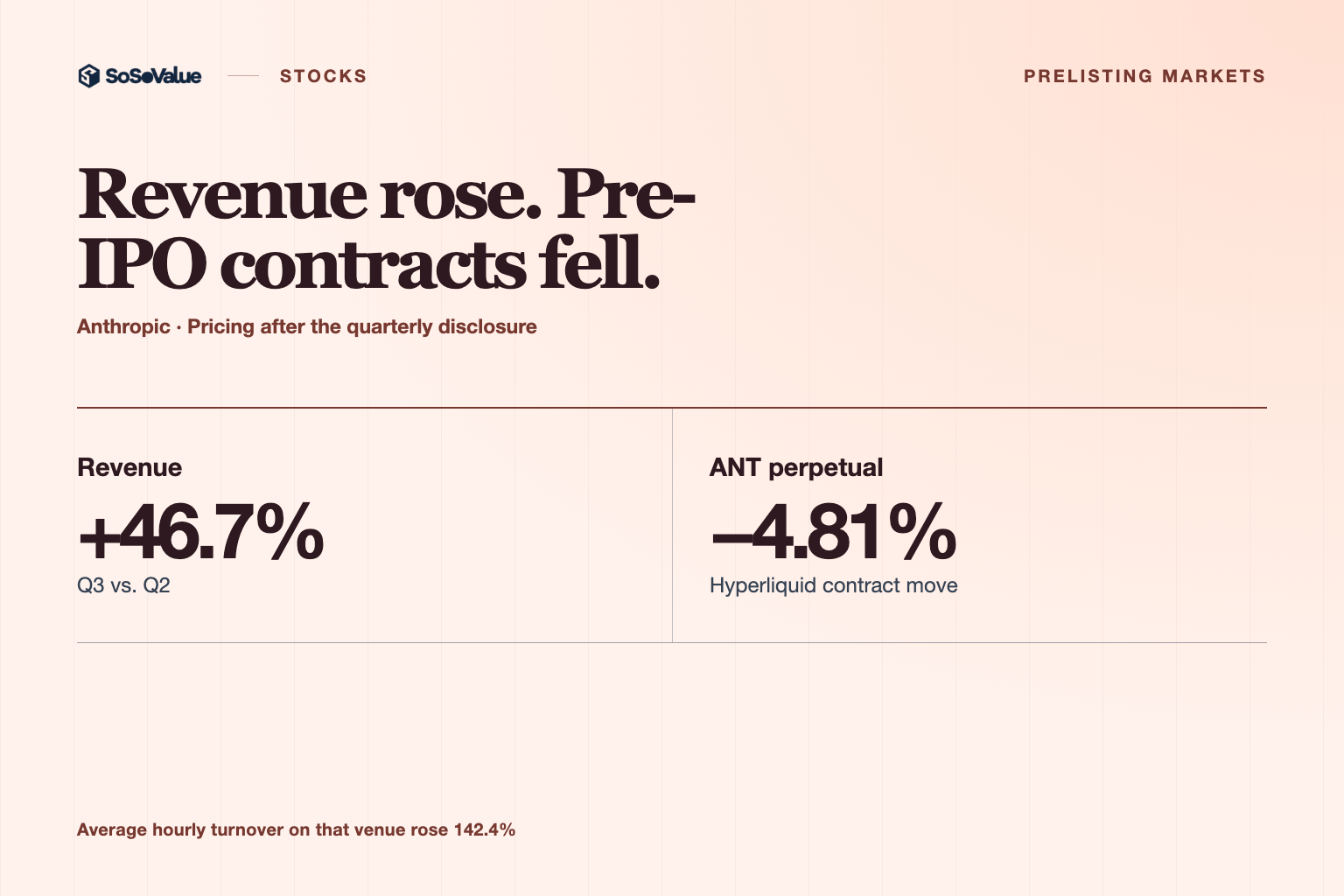
The first trading response to Anthropic’s quarterly disclosure came from derivatives tied to a company whose shares had yet to list. Revenue grew rapidly and a number of those contracts lost around 4% to 5%. The reaction captured the tension between increasing use of Claude and the expenses Anthropic accepted to serve it, in markets with their own constraints.
Faster demand came with a bigger bill
The prospectus showed that Anthropic had taken delivery of approximately $5 billion in short-term compute capacity. It said the new capacity cost substantially more than comparable multiyear commitments. That put spending on growth at the center of the disclosure.
Quarterly revenue of $16.96 billion was up from about $11.56 billion in the prior quarter. The comparable infrastructure expense share rose from about 48% to 58% of sales. Anthropic reported a GAAP operating loss after a profit in Q2, and the adjusted operating margin fell to about 15% from 19%. Third-quarter net loss included nearly $22 billion in fair-value changes on financing instruments. Looking at operating measures separately showed pressures from the running business beneath that larger accounting figure.
Prices fell as trading picked up
Hyperliquid, OKX and Gate all saw Anthropic contracts decline. On Hyperliquid, average hourly turnover increased 142.4% versus the preceding 24 hours. Traders changed their exposure during a broader period of weakness in AI stocks.
Activity accelerated at the same time as prices fell. OKX and Gate contracts lost about 4.18% and 4.85%, respectively, in the disclosure period. Trade.xyz’s contract lost around 4.81%, with average hourly value traded more than doubling relative to the preceding day. The similar price direction across venues strengthens the evidence of a broadly shared repricing. It remains possible that the same traders and the wider selloff influenced more than one venue.
What a perpetual can tell you
Before a stock lists, the contract is a leveraged market with its own collateral, liquidity and funding. Comparing venues helps identify a shared move. The price remains a signal about exposure in those markets, while the underlying company’s earning power depends on utilization, costs and future cash flows.
A move accompanied by higher turnover can mark conviction or a need to exit. Each contract has its own collateral, order book and funding mechanism. A leveraged participant may reduce exposure because available collateral has fallen, independent of a new view of the company’s future margin. Those frictions add information about positioning alongside the information the prospectus offered about the business.
For readers comparing future disclosures, the distinction to preserve is between the change in the value of the listed or referenced instrument and the change in underlying operating economics. Higher usage increases revenue. The company’s return depends on how it replaces expensive short-term capacity and turns committed future infrastructure into paying work.


 00:00